
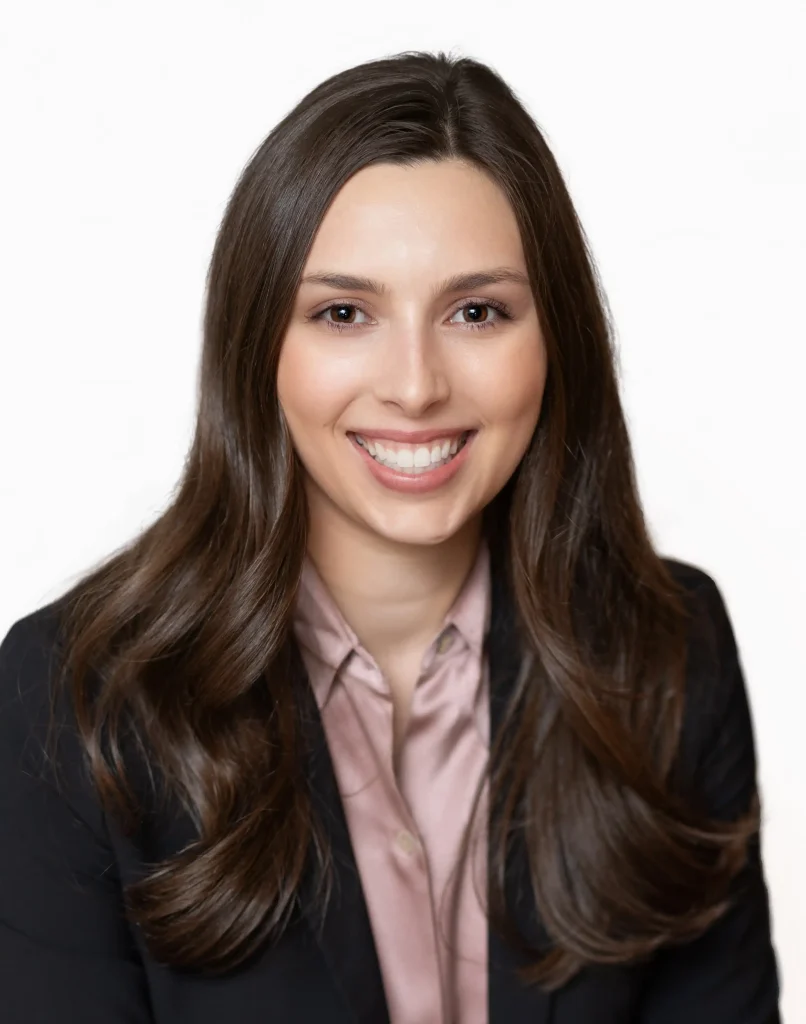
First, welcome. We’re all excited you’re here. As a way to jump in, can you tell us about how this opportunity came about and how you decided it was the right time to join the family business?
I spent the last four years in consulting, doing change management for technology implementations, and supporting mergers and acquisitions. I was doing my day job while also listening in on family conversations, weighing in and problem solving when there was something that was exciting or relevant to me.
Over the last few years, my dad and I have been checking in quarterly to see how I’m progressing in my career and if there were any opportunities in the business where I could bring my expertise. From the timing standpoint, a lot of it boils down to Walsworth having more of a technology focus and switching from being a printing business to thinking more about Walsworth as both a printing and technology business.
The second, of course, is (new Walsworth CIO) Jen MacIvor. I was excited about the opportunity to work for a leader who had global experience, who had a background that was similar to mine. She’s been in consulting. And when I heard about her direction with the technology team, I felt like this was the time I could join and make a difference at the precipice of a lot of transformation.
Your role is a new one for Walsworth – change management. For those who aren’t familiar with the work you were doing as a consultant and what you’re going to be doing here, can you explain?
For sure. Change management is at the intersection of people, processes and technology. So, what change management does is help people adopt processes and technology or both more efficiently and effectively. That’s why I can speak a little bit of the language of a technology person, a little bit of process improvement, and then also have the people side.
My goal, and what I did in my previous job, is to help liaison between business objectives, business goals, people’s desires and the technology solutions that support them. I’m thinking about this every step of the way. What is the impact on the end user? What is the impact to the customer? Is it a positive, negative or neutral change? Is it something that’s going to be a daily task, a monthly task, a yearly task that we’re changing for them? And then what do people need to be successful?
Now that you’re getting started, have you started to outline what your first 30 days, first 60 days is going to look like?
Yes and no. One side of my job will be change management. I’ve started meeting with business functions and the different tiers within technology to understand how that interacts with the business. Then, I’m also working on portfolio management. That includes taking an assessment of what are the in-flight technology projects? Where do they sit organizationally? Who is the business sponsor? How are they interacting with the IT team?
That’s my primary focus – understanding what we are working on and then helping build out the technology 2030 strategy by supporting discussion sessions with all the business units. From there, we can dive deeper into what it actually means to implement these projects. I’m still in the information gathering phase, and my first step is to figure out where we are at baseline.
Was there a specific moment or a conversation when talking to your dad where you thought “OK, I really think this might be the right time to come aboard?”
Yeah, I got excited hearing about all the AI and automation work through Tripp, which is a huge change not only for Walsworth, but for the entire world. AI really wasn’t something people talked about using in their day-to-day life until recently. And it’s been an adoption curve as a society. It’s on the leading edge of technology, a transformation for the future, especially in the manufacturing business.
I also will add that, while the professional timing worked out well, this was also the right time in my personal life. I got engaged in December, and I’ve been doing some soul searching on what really is important to me, what do I want to be known for and what’s the impact I want to have?
That played a role in joining Walsworth too, because this is my family’s legacy. This is a 4th generation business that we want to continue on.
It is also a great opportunity to work with Tripp. Tripp and I have very complementary skill sets. It felt like if we’re building the future of this company, we should do it together.
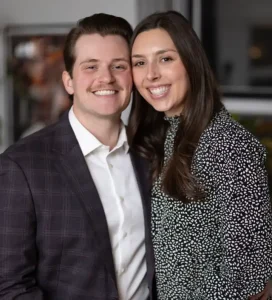
And your mom and significant others will probably be at dinner saying, “Can we stop the business talk?”
(laughs) I was telling Jen earlier that part of the advice I’ve gotten around running a family business is to have good boundaries. One of the reasons people with family businesses can suffer is because the lines between family and business gray so hard that there are no boundaries. So one of the goals I have is to figure out what is that healthy balance? When we go have Sunday night dinner, it can’t only be business, right?
When we talked to Tripp at a similar point when he joined the company, I remember asking him what his memories or perceptions were of the company when you guys were growing up. What do you remember?
That’s an interesting question because I have kind of a silly answer, which was that we got to go to the sales meeting, so we’d sometimes go on a fun wintertime vacation.
It’s also an interesting business because there is a school impact to it. Growing up, my thought was just, wow, it’s so cool we get to be part of something that people my age get to touch and feel and be part of, which is why I wanted to be in yearbook when I was in high school. Then I became the editor and I thought it was cool to get to interact with the business side of that.
And your dad was often busy, I would imagine.
Yes, and just the responsibility he felt with continuing on the family business that is rooted in small towns. When a lot of the industry and manufacturing died in small towns, Walsworth grew. My parents were both from smaller towns, and they’ve always been really committed to these types of communities. While Tripp and I didn’t grow up in a small town, I do feel that connection as well.
Did you spend much time in Marceline growing up or going to your grandparents?
Yes, mostly with my grandparents.
We spent a lot of weekends and holidays up there. We’ve since stopped spending the night mostly because our family has expanded and there aren’t enough beds for people, but I remember growing up, my grandparents had a big bunk room in their basement and all of the bunks had sports teams on them.
They were all NFL teams, and all the boy cousins had that. And then my cousin Audrey and I had a room with pink bedspreads and a tea set, and we would play tea party. Those are fond memories.
You mentioned being yearbook editor in high school. What did you take away from that experience?
I have so much respect for yearbook editors. It’s a lot of work. And way more work than you think when you’re going in because it was my first real taste of a deliverable and the responsibility of knowing that what is submitted is going to be printed forever.
Which makes you think through things with a little bit more of a detailed eye.
But I had a great experience. I spent way too much time in InDesign, way too much time with picas. Jen’s kids go to Barstow, where I went to school. We were flipping through the yearbook that I was the editor for, and it brought back some nostalgia of just figuring all of that out, the trial and error, being creative.
Were you a designer originally before you became editor?
Yes, I did design or copy, not photography. I had a co-editor and she was more focused on the photography side. We kind of split the responsibilities down the middle.
But it was a really cool experience to see the whole life cycle of a project, starting with the cover. And then you work your way backwards, keeping things consistent with the theme.
And then, of course, the best part was when you got to reveal it. At our school, it was all a secret. We had all the windows blacked out, and no one could come into the room. All the doors were locked. Getting to reveal the book to the school and share all the hard work that we had done was really cool.
You were well-known as a great athlete in high school, especially in basketball. Are you still the all-time leading scorer at Barstow?
I am – with almost 1,500 points. At least, I think I still am. (laughs) I still was as of a few weeks ago. I went back recently for my first game since I left, and the athletic director said I still was.
Like with yearbook, what lessons did you take from being an athlete in high school?
My basketball experience at a small school was unique, and it was different than Tripp being on a state championship team. My team was not great, except my senior year. It was 100% a different vibe. It was much more of learning and growing, and we had a lot of players who wanted to play. We had more bench strength, but we lost a lot. We weren’t a team people feared.
But I learned how to be a leader, like a quiet leader my first few years because we had a lot of upperclassmen. And while I was a really good player, it never felt natural for me to be the leader. Then we had excellent freshmen join the team my senior year, some who went on to play college ball. We had a great starting five.
We made it all the way to sectionals but lost because we were young. We didn’t know how to compete at that level. But that season taught me a lot about mentorship, the power of words and that people need positive reinforcement.
And there’s just something about having a team and working towards a collective goal. I can be fairly independent, but you cannot win with one good player. I learned that my first three years. I had to rely on my teammates.
Was basketball your primary sport or did you play others?
Basketball was my year round competitive sport. I played volleyball for fun.
It was a small school. People knew I was tall; I was athletic. They were like, okay, we can throw you out there. Volleyball was fun because it was something I wasn’t great at initially. But it was also a learning opportunity because that was the first time I’d really experienced something I wasn’t great at. I had to fumble through.
Are you a golfer?
I’m an okay, recreational golfer. You know Tripp and my dad are excellent scratch golfers. I play golf for fun, which is I play until I’m not having fun anymore. (laughs) If I hit the ball and it goes straight and stays in bounds, then I’m going to keep playing the hole. If I chip and it goes out of bounds, I’m just picking my ball up and walking off. I’ll just move on from there because I’m having fun.
Was it competitive between you and Tripp on the basketball court growing up?
It was competitive in the driveway. Tripp’s basketball experience was different than mine. He was a three-point shooter, a specialist. He played on a great team with a lot of high-scoring players who went on to play in college and then some even went on to play professionally in Europe. So he would come in, play tough defense, and shoot three 3-pointers, and he would make them and that would be it.
Whereas I’m tall, so I was more of a post player. I would have a lot more shots, but it was a lot less of the flashy stuff.
But we’d always play “PIG” in the driveway. And we did a lot of drills running back and forth. We both encouraged each other, because we could kind of play games to our own strengths. We did 3-pointers for him, then I would do shots from the top of the key or something.
After high school, you were ready to move on from basketball?
I explored playing in college, looking at mostly academic D2 and D3 schools because, while basketball was an important part of my life, I had strong academic goals. In the end, I really wanted to go to a D1 school for sports and be a spectator. I wanted to be able to go to the football games and the basketball games. That was more important to me than me playing on the court.
That’s why I chose Vanderbilt because it’s kind of close by. It’s an SEC school. It has good sports. While I was there, I got involved with the football team. I worked in athletic training because I was pre-med for my college experience.
It taught me a lot of discipline because those practices were super early, and the travel definitely was not glamorous. Going through that made me realize something. If a D1 SEC program traveled like that, I probably would’ve been miserable riding a bus every weekend at a D2 or D3 school. It was already hard to keep up with school and I wasn’t even doing all the things that an athlete was doing.
I was just doing the before and after practice, whereas they also had study halls, the treatments and the training sessions. You don’t think about that when you aspire to be a college athlete. I have so much respect.
With your degree and field of study, were you considering being a doctor?
When I went to college, I 100% wanted to be a family medicine doctor, because I really care a lot about holistic well-being and I felt that was a really great way to make an impact.
Then, I went to college and my sophomore year and my junior year were heavily impacted by COVID. I was taking organic chemistry in my parents’ basement over the summer and studying 10 hours a day. And I was thinking, wait a second. Is this what I want for my life? Is this what I want for my personal life too?
Becoming a doctor requires you being 150% in on day one and I was about 75% in, which was not enough to get me through 12 years of training. That’s why I went into consulting because I wasn’t positive what I wanted to do.
I decided to do business exploration, which is what consulting is. I ended up in a spot that was more about human and organizational design and development, which was my minor in college. It felt like a little bit more of the psychology of business, which fed into what I wanted out of medicine.
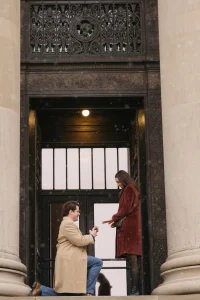
Let’s talk about life outside of work. You’re engaged now?
Yes, just got engaged in December. Max, my fiancé, and I have been together for three years. He’s from here and grew up in Prairie Village, went to Shawnee Mission East, went to K-State for school.
He works in marketing as a brand manager for a local company, and he’s a hockey player, not basketball. So I win at basketball. (laughs) You don’t want to see me on ice skates. It’s not pretty. We balance each other out.
How did you guys meet?
We did something called BOTAR (Belles of the American Royal), which is an organization through the American Royal. Basically, it’s a fundraising organization and as part of the process, you’re matched up with someone and you do this elaborate dance. They sell tickets and raise money.
We met in August of 2022 as dance partners and became really good friends. I actually had a boyfriend at the time, not Max. Our friend group did a lot of things together, and it was great. Unrelated, I broke up with my boyfriend and a couple months later, Max and I were both at an event and we were like, oh my gosh, maybe there’s something here more than just being friends. So we tried it out, and here we are. We’re getting married.
Any other hobbies? What do you guys do for fun?
I go to workout classes – group fitness, strength training, a little bit of cardio. I like it because I just show up and they tell me what to do. I don’t have to think about it.
I also love to read. In January, I actually read five books. So I’m on pace for over 50 this year, which is one of my goals.
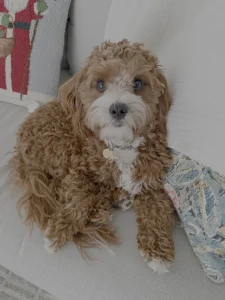
What else do we do for fun? We walk the dog. We watch a lot of TV shows.
Do you have some favorites?
We just finished “Slow Horses.” Really good. “Shrinking,” we’ve been watching that. “The Pitt.” I love “The Pitt.” I like to watch more of the suspenseful shows.
Honestly, our biggest hobby right now is wedding planning. We’re getting married May 8, 2027. I’ve got a little bit of time, but you’d be amazed at how fast people expect things.
We’re pulling the Pinterest boards together.
Do you have a favorite book?
That’s always a hard one. I can’t give you a favorite book ever, but I can give you a few of my favorites. I love Theo of Golden. On that same vein, I also love The Authenticity Project. Another favorite is The Correspondent.
Are you a serial reader?
Right now I’m reading The Lion Women of Tehran, which I’m enjoying so far. I think it’s such a nice way to wind down in the end of the day instead of being on my phone.
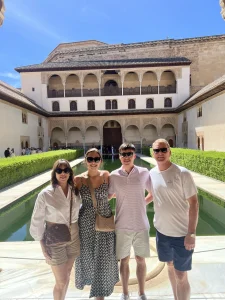
Do you have a family trip or a vacation that stood out as your favorite?
Last fall, our family went to Spain. That was awesome. I think my parents were starting to realize that relationships were getting serious and our nuclear family was about to expand. In a good way, but also kind of a bittersweet way. So they’re like, let’s take one last trip just the four of us, and we really enjoyed each other’s company.
That was special because I think we really soaked it in and we were all really present. We enjoyed the food and the culture.
What about any trips with your grandmother? I know as kids you all got to travel to a lot of really cool, unique places.
It’s hard to narrow down those experiences because they were all so different. One of the cool things about our trips with Grammy was that she took us places we probably wouldn’t have gone before. We went to places like Machu Picchu and Peru, and we went to Angkor Wat, Cambodia.
But I will say one of my favorite trips with her was when we went on a river boat cruise down the Danube in Europe, and we got to see a lot of the Czech Republic, Austria, Hungary and Slovakia. Prague and Vienna, all those places that have so much culture. That’s probably one of my favorites.
What’s one thing about you most people would not know?
One thing that’s unique is that I’m in the top one percent of listeners for Luke Combs on Spotify. That is definitely something most people don’t know. So I would say I’m a little bit of a super fan. (laughs)
If you had a personalized coffee mug, what would it say?
Okay, I have a couple. One would be “nickname or catchphrase enthusiast” because I do love nicknames and have a lot of little catchphrases. Our dog, Bogey, has a million nicknames. Also, right now I’m onto the catchphrase “perfecto.” Everything is “perfecto.”
Or “dog lover,” because I quite literally love dogs. I think they’re sent straight from heaven and bring pure joy.
Do you have anything else you’d like to share?
The thing I keep thinking about is our vision that says amazing people delivering the best print experiences. I’m really stuck on the amazing people part, and I want to get to know everyone. I want to know those amazing people.
So, the biggest thing I would say is that I want to feel approachable. I want to feel like a person someone can go to. Change management only works with trust, and I want to earn people’s trust.
