Personalized printing once meant little more than swapping in a name or address. Today, marketers and publishers can tailor message, imagery and even how a piece is assembled so it feels intentionally designed for one recipient, not a broad list. That is the current bar for hyper-personalization in print: 1:1 relevance delivered at scale, powered by customer insights and modern production workflows.
With variable data printing, high-speed inkjet, integrated mailing and print-on-demand workflows, much of what once felt like the “next frontier” is already in production. The bigger shift is no longer what presses can technically do. It is how confidently organizations connect data, creative and manufacturing into a repeatable system.
Why Hyper-Personalization Works in Print
Physical media is processed differently than screens. Neuromarketing research summarized by the U.S. Postal Service Office of Inspector General shows that physical advertising activates different areas of the brain tied to attention, emotional response and memory than digital media. Those differences help explain why print often performs well in recall and engagement studies.
When print earns attention, personalization multiplies its impact. The goal is relevance that feels natural and useful, such as “this speaks to my role, my region and my next decision,” rather than personalization for the sake of novelty.
What’s Possible Today With Personalized Printing
Hyper-personalization does not require rebuilding an entire catalog or magazine. Most successful programs rely on proven building blocks that scale.
Variable Text, Images and Offers
Variable data printing allows names, headlines, images and calls to action to change from one copy to the next within a single run. At scale, the real work happens upstream. Clean data, clear business rules, strong file preparation and reliable mailing workflows are what make personalization feasible for large programs, not just the digital press itself.
Dynamic Templates That Protect the Brand
The most scalable personalization is modular, not one-off. Approved templates allow content blocks to swap based on defined rules. That might include a segment-specific cover, a regional introduction, a curated product mix or a role-based offer. This approach delivers variation while maintaining brand consistency.
For lower-volume needs, many teams begin in Adobe InDesign using Data Merge. Higher-volume programs often rely on standards like PDF/VT, which support predictable handling of complex variable files across platforms.
Inkjet Imaging, Inserts and Finishing Personalization
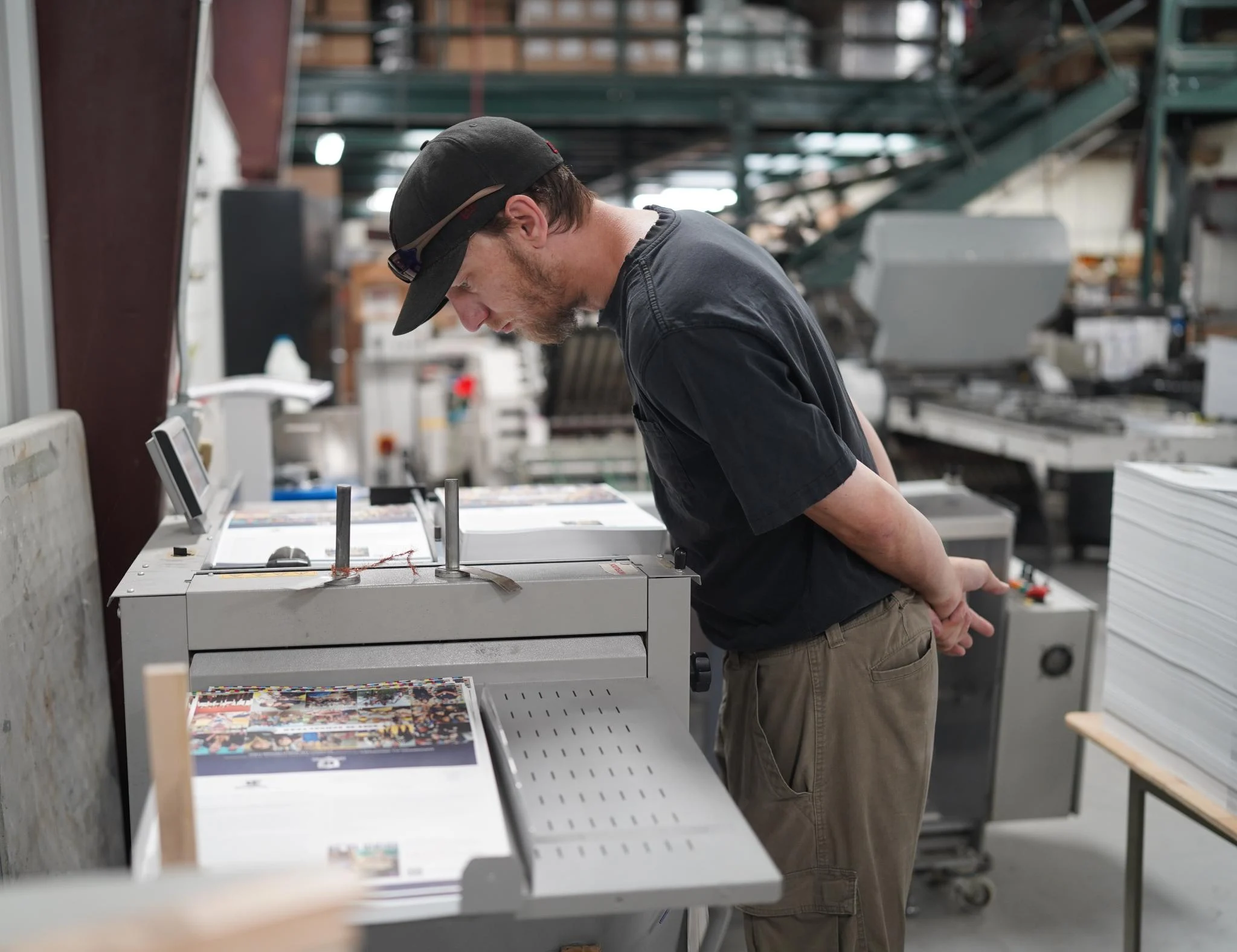
Not every page needs to be digitally printed to feel personal. Many publishers produce a high-quality base book using offset printing, then add variable messaging later through inkjet imaging.
Personalization can also happen during binding and finishing. Inserts, tip-ons and labels make it possible to tailor the reader experience without reworking the entire publication, which helps control costs and production timelines.
Data Integration That Makes 1:1 Practical
Personalization is only as strong as the data behind it. Most enterprise organizations already have usable data, but it often lives across multiple non-connected systems.
Early success usually comes from narrow scope. Select the fields that drive relevance, normalize formats and suppression rules, then establish a repeatable process for data mapping, proofing and approvals before expanding further.
Use Cases for Hyper Personalization
Hyper-personalization is especially powerful in applications where relevance directly affects comprehension, motivation or emotional connection. In education, publishers are producing personalized curriculum materials for young students that adjust reading level, pacing and examples to support individual learning needs.
In health and wellness, personalized books can be built around an individual’s health metrics, dietary preferences or lifestyle goals, turning generic guidance into something more actionable and engaging.
Storytelling is another area seeing strong adoption, particularly in children’s publishing, where placing a child directly into a story as a character creates a memorable experience that blends personalization with emotional resonance to create long-term keepsake value.
Marketing Strategies That Work Especially Well in Print
Account-Based and Role-Based Catalogs
In B2B environments, print personalization can speak directly to specific companies, regions and decision makers. Role-based catalogs and sales tools help buying teams find what matters faster while reducing friction in the purchasing process.
Lifecycle and Triggered Mail
Print performs well in lifecycle moments where timing and context matter. Common triggers include welcome kits, renewal packages, replenishment reminders, win-back offers and milestone-driven upsell pieces. When print, mailing and fulfillment workflows are connected, these programs can run with minimal manual intervention from production through delivery.
Distributed Teams With Central Control
Organizations with large field or sales teams often use centralized print portals that allow authorized users to personalize approved templates. This model balances local relevance with brand control while consolidating output into efficient print and mailstreams.
Measuring Personalized Print Like a Performance Channel
At the individual piece level, personalization should be paired with a unique response mechanism such as a QR code, personalized URL or offer code. These tools help connect physical print to digital behavior and campaign reporting.
At the mailstream level, USPS Intelligent Mail barcodes enable sorting, tracking and visibility for letters, flats and cards. Programs like USPS Informed Delivery for Business Mailers add a complementary digital impression that is tied directly to the physical mailpiece, extending reach without replacing print.
Data Governance and Trust in Personalization
Hyper-personalization should feel helpful, not invasive. That requires clear policies around consent, retention and opt-outs, along with discipline about which data fields are truly necessary. The NIST Privacy Framework is often used as a reference for managing privacy risk while still enabling innovation across partners and internal teams.
A practical rule of thumb is to use data that improves relevance in ways customers reasonably expect, then document how long that data is retained, who can access it and how suppression lists are enforced.
The Near Future of Personalized Print
Two developments continue to expand what personalized print can deliver. Standards like GS1 Digital Link make it easier to connect unique identifiers on printed pieces to brand-controlled digital experiences at scale. At the same time, advancements in data, decisioning, design automation and measurement are accelerating how quickly tailored content can be created and deployed, with generative AI acting as a catalyst rather than a replacement.
USPS is also encouraging more interactive mail through its promotions program. The PostalPro Promotions Guidebooks provide a clear view into which capabilities and technologies are currently being incentivized.
How to Start: A Pilot That Proves Value Fast
The most effective way to begin is with a controlled pilot. Focus on one audience segment, a limited set of variables and a clear response mechanism. This approach keeps complexity manageable while producing real performance data.
A strong first pilot often includes a personalized cover paired with one targeted offer, measured using a QR code or offer code. Once the workflow is stable, programs can expand into modular page swaps, targeted inserts and triggered print-on-demand executions. From there, you can use a variety of data points and measurement tools to keep track of ROI, creating a strong case for future expansion into personalized print.
Ready to learn more about how Walsworth can help launch your personalized print program? Get in touch with us today.
This article was developed with assistance from OpenAI’s GPT 5.2 Pro Deep Research large language AI model.