Earth Day is a good time to remember that sustainability in printing is not defined by a single choice. It is the result of decisions made across sourcing, pre-press, pressroom operations, finishing, packaging and distribution. Water is one of the most important parts of that equation. At Walsworth, water recycling and improved processes have helped reduce water usage and wastewater output; that work is part of a broader effort to make print production cleaner and more efficient.
For many print buyers, water use can feel invisible. You see the finished catalog, book or magazine, but not always the resources behind it. At Walsworth, we look at that footprint across the full production cycle, from the forests that supply our paper to the workflows and equipment that shape each printed piece. That is why our sustainability efforts include FSC and SFI certifications, documented chain of custody and process improvements at every stage of manufacturing.
Water Stewardship Starts Upstream
Our work to minimize water impact begins before a job reaches the pressroom. Most of our paper comes from forests in the Great Lakes region of Northern Michigan, while the rest is sourced from other responsibly managed forests. In the paper-making stage, water used in pulp production is reused before it is returned to nearby waterways. Paper mills also reuse excess heat from processing for energy, improving overall efficiency.
We also look at the footprint created by moving materials. Whenever possible, we choose rail transportation for paper shipments and source the majority of our paper from the continental United States. Those decisions help reduce energy use and emissions tied to long-distance transport, which strengthens the overall environmental performance of the projects we produce.
Smarter Processes Inside the Plants
Inside our facilities, reducing water use is not a side project. It is built into the way we operate. Along with water recycling, improved processes have helped us cut water usage and wastewater output by 60%. We also reduce leftover material through tighter spoilage allowances, smaller minimum sheet sizes and more precise ink planning, which helps prevent waste before it happens.
Our equipment investments support that effort. We continue to reinvest in newer, cleaner and more efficient machinery, including low-emission press equipment. For example, our Goss Sunday web press is designed to reduce paper waste through shorter cutoffs and fewer make-ready impressions, and its atmospheric exhaust is mostly water vapor, which reduces its overall footprint.
Cleaner Materials, Lower-Impact Production
Water use is only one part of a print job’s footprint. We pair water-saving efforts with material choices that support a cleaner process overall, including low-emission press equipment, recyclable aluminum plates and vegetable-based inks that are safer for the environment and easier to recycle than traditional petroleum-based inks. Walsworth reported a 60% reduction in volatile organic compounds and a 99% reduction in hazardous air pollutant emissions from 2010 to 2020.
Recycling remains integral to how we minimize waste. Across our facilities, we recycle nearly 1 million pounds of aluminum and 30 million pounds of paper and other fiber-based products annually. The boards used for hardcover books are made from recycled materials, and our packaging includes recycled fiber with at least 35% post-consumer content.
Digital Workflows Help Boost Efficiency
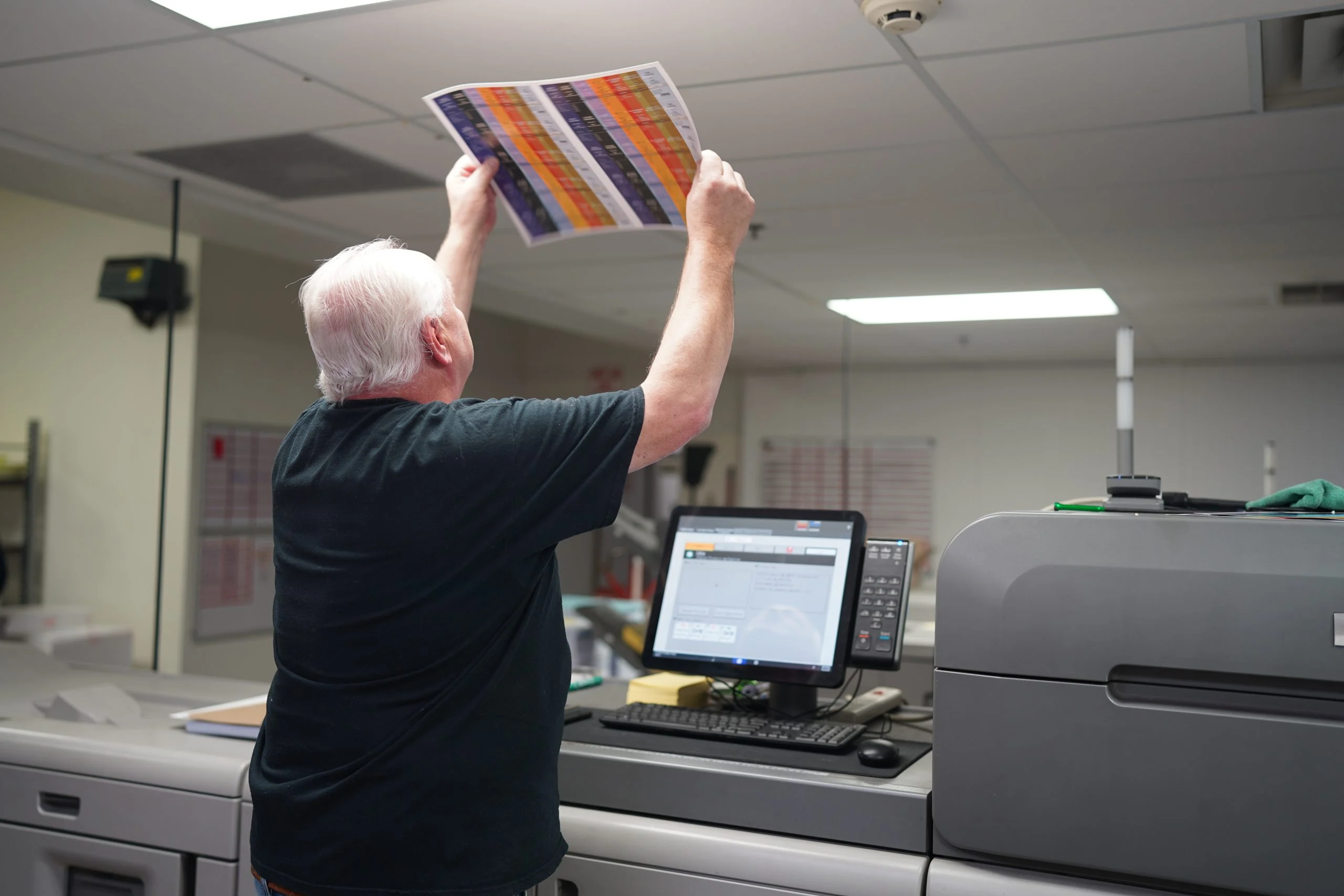
One of the best ways to reduce water-related impact is to avoid certain production steps altogether. That is one reason we embrace digital proofs whenever possible; electronic proofing eliminates the need for printed proofs, toner, paper, labels, wrapping, packaging and transport.
Our more recent digital printing capabilities provide another advantage. Digital inkjet and digital toner printing can reduce consumption through plate-free workflows that remove material impacts. Aqueous inks and water-based primers provide a more sustainable alternative to traditional petroleum-based inks, and digital toner presses eliminate ink cleanout water, solvent washups, fountain solution monitoring and blanket washes between jobs.
That makes print-on-demand a valuable part of our sustainability mix. Our digital platforms are built to print exactly what is needed, when it is needed, while supporting short runs, simplified inventory management and seamless integration with ordering systems.
Printing With Purpose on Earth Day (and Every Other Day)
Earth Day reminds us to consider the resources that go into a commercial printing operation, but meaningful progress comes from daily decisions. At Walsworth, minimizing our footprint means looking at the full picture, from water use in paper production and plant operations to recyclable materials, cleaner inks, efficient equipment, recycled packaging and smarter digital workflows.
When sustainability is built into how a job is sourced, planned, printed and delivered, it becomes more than a claim. It becomes part of the craft. Happy Earth Day from all of us at Walsworth – we proudly look forward to another year of sustainable printing and responsible choices. If you’d like to know more about Walsworth’s processes, get in touch with us today.