If you work with books, you’re likely familiar with digital printing and offset printing, and their respective use cases. On one side, you want the flexibility in formats, versions and lifespans offered by digital printing. On the other hand, traditional offset print economics reward volume and predictability. Book-of-one printing is where those two pressures meet.
Below, we will define book of one, contrast it with short-run digital printing, walk through smart use cases, talk about where the unit cost becomes a problem, then look at how it ties into inventory, e-commerce and Walsworth’s digital inkjet platform.
What Is Book-of-One Printing?
To understand book of one, you must first understand print on demand. At its simplest, print-on-demand (POD) means producing books only when orders arrive, rather than printing large batches for warehousing. Digital printing made POD practical by eliminating plates and enabling economical short runs.
Book of one is POD pushed to the single-copy level. The goal is to treat every order as a unique job, route it through an automated workflow, print one copy per order, then bind and ship it with minimal human touch. In other words, it’s a POD model designed to make a run length of one operationally efficient through automation.
You can think of book-of-one printing as a combination of three things:
- A digital press platform that can switch quickly between titles and formats
- Finishing that can handle variable book sizes and spine thickness
- Software that automates order intake, imposition, batching, printing, binding and shipping
Book-Of-One Printing vs Short Run Digital
Short-run digital printing and book of one use the same core technology, mainly inkjet or toner based digital presses. The difference is how tightly they are integrated with demand.
Short Run Digital
In a short-run digital model, you might print 50, 100 or 500 copies at a time in response to demand. These runs are still relatively small compared to offset, but you are batching orders or forecasting ahead. The unit cost is lower than a true book of one because you spread the set up and handling costs over more copies.
Book of One
In a book-of-one model, you do not batch by title in the same way. Each order is treated as its own micro job, or grouped only loosely with others that share format or stock. Workflow systems consolidate these into efficient production sequences while still producing as little as one copy per order.
Put simply, short-run digital optimizes small batches by title, while book of one optimizes individual orders. Both approaches reduce inventory risk, but they fit different volume and title profiles.
Where Book-of-One Printing Shines
Book-of-one printing is not the answer to every problem, but there are specific scenarios where it is uniquely powerful:
Ultra Long Tail Backlist
For publishers with deep backlists and many titles selling only a few copies a year, book of one is often the only way to keep those titles available without tying up capital in inventory. Instead of warehousing 100 copies that may sell slowly, you keep press ready files and print when an order comes in. This is a classic long tail publishing strategy that POD enables.
Custom Compilations and Coursepacks
Higher education, professional publishing and corporate communications often need content assembled from multiple sources. Book-of-one workflows can merge chapters or modules into a custom compilation for a specific course or client, then print that exact version once per recipient. The ability to vary content at the book level is where digital inkjet really earns its keep.
Training and Technical Manuals
Training content changes frequently, especially in regulated or high tech environments. Book of one lets you:
- Keep content current without pulping outdated manuals
- Localize material by site, job role or region
- Add unique identifiers, access codes or QR codes to each copy for tracking
Because you never print ahead of demand, you avoid the friction between version control and bulk printing.
Premium or Personalized Editions
Book of one really shines on the revenue side when you use it to create premium experiences, such as:
- Signed or numbered limited editions
- Personalization for VIP customers or donors
- Special configurations for events, conferences or fundraising campaigns
Here, you are using the flexibility of digital to add perceived value, not just to save inventory cost.
When Unit Cost Becomes a Problem
The flip side of all this flexibility is unit cost. A handful of books printed on demand, handled as a unique job, will almost always cost more per copy than a batch of hundreds printed on the same press, and much more than a large offset run.
The economics come down to three thresholds:
- True book of one volume
If a title only sells a few copies per year, or each copy must be unique, there is no realistic alternative. Book of one is the least expensive way to serve that demand because the alternatives involve waste or obsolescence. - Short-run digital inkjet
Once you are consistently ordering dozens of copies per order, short-run inkjet or toner-based digital usually wins. You can still operate in a POD model, but instead of one copy per order, you place periodic replenishment orders of 50-100 or more. That lets your printer optimize imposition and finishing, which reduces unit cost while preserving flexibility. - Offset’s sweet spot
For titles with reliable demand in the hundreds or thousands, traditional offset becomes hard to beat on a cost per unit basis. Plate and makeready costs are amortized over many copies, and the press speed is very high. Offset requires larger runs resulting in more inventory, but if the title is stable, the savings often justify it.
The exact crossover points depend on format, page count, paper, finishing and the specific equipment involved. The general pattern, though, is consistent. Book of one is most valuable where demand is low, sporadic or highly customized. Short run digital works well in the middle range. Offset excels when you have steady high volume.
How Book of One Integrates With Inventory and E-Commerce
Book-of-one workflows only reach their full potential when they are tightly integrated with your e-commerce and inventory systems. Conceptually, a mature setup looks like this:
- Your e-commerce platform or ordering portal exposes your catalog to readers, students or internal stakeholders
- When an order is placed, the system checks inventory; if stock is zero or below a set threshold, it triggers a print-on-demand job instead of a warehouse pick
- Order details and title metadata flow automatically into a POD workflow system that generates print-ready files, groups jobs with similar attributes and sends them to the appropriate press and finishing line
- Once the book is produced and shipped, tracking information flows back to the e-commerce system and the order is closed
For long-tail titles, you may choose to hold no physical inventory at all. For stronger sellers, you may maintain a small safety stock and fall back to book of one when a spike arrives or a specific configuration is needed.
From a systems perspective, the key requirements are:
- A single source of information for product data and versioning
- APIs or standardized file exchanges between e-commerce, order management and production
- Clear business rules that determine when to ship from stock, when to trigger short-run digital and when to use pure book of one
Book-of-One Printing With Walsworth
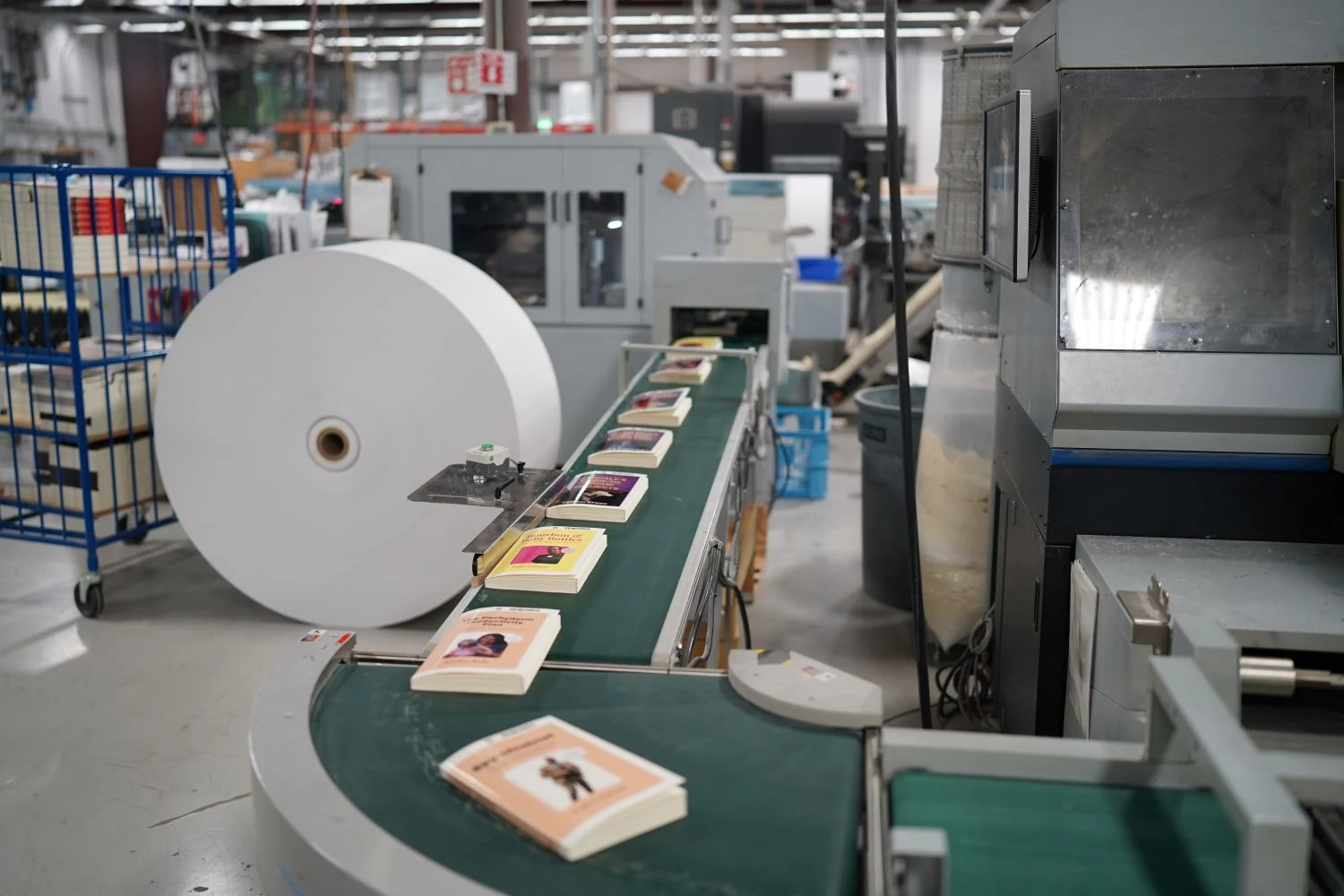
Walsworth has invested heavily in digital inkjet and POD as part of our broader book printing platform. In 2025, Walsworth acquired Documation in Eau Claire, Wisconsin, a facility with advanced capabilities in digital inkjet print-on-demand. The plant was integrated as Walsworth – Eau Claire and expanded our capabilities into on-demand digital printing while maintaining the high quality and service Walsworth is known for.
For publishers and content owners, that means you can:
- Keep long-tail titles available without warehousing
- Stand up custom training or education programs with minimal lead time
- Offer premium, personalized editions that align with your brand
- Make smarter decisions about when to stay in book of one, when to consolidate into short runs and when to move to offset
Explore Walsworth’s Book of One Capabilities
Book-of-one printing is not a replacement for every print strategy, but it has become a powerful tool in the mix. Used thoughtfully and integrated with your inventory and e-commerce stack, it lets you match supply to demand almost perfectly while opening creative possibilities that traditional print models could never support.
If you’re ready to learn more about how Walsworth can support your goals, get in touch with us today.
This article was developed with assistance from OpenAI’s GPT 5.1 Pro Deep Research large language AI model.