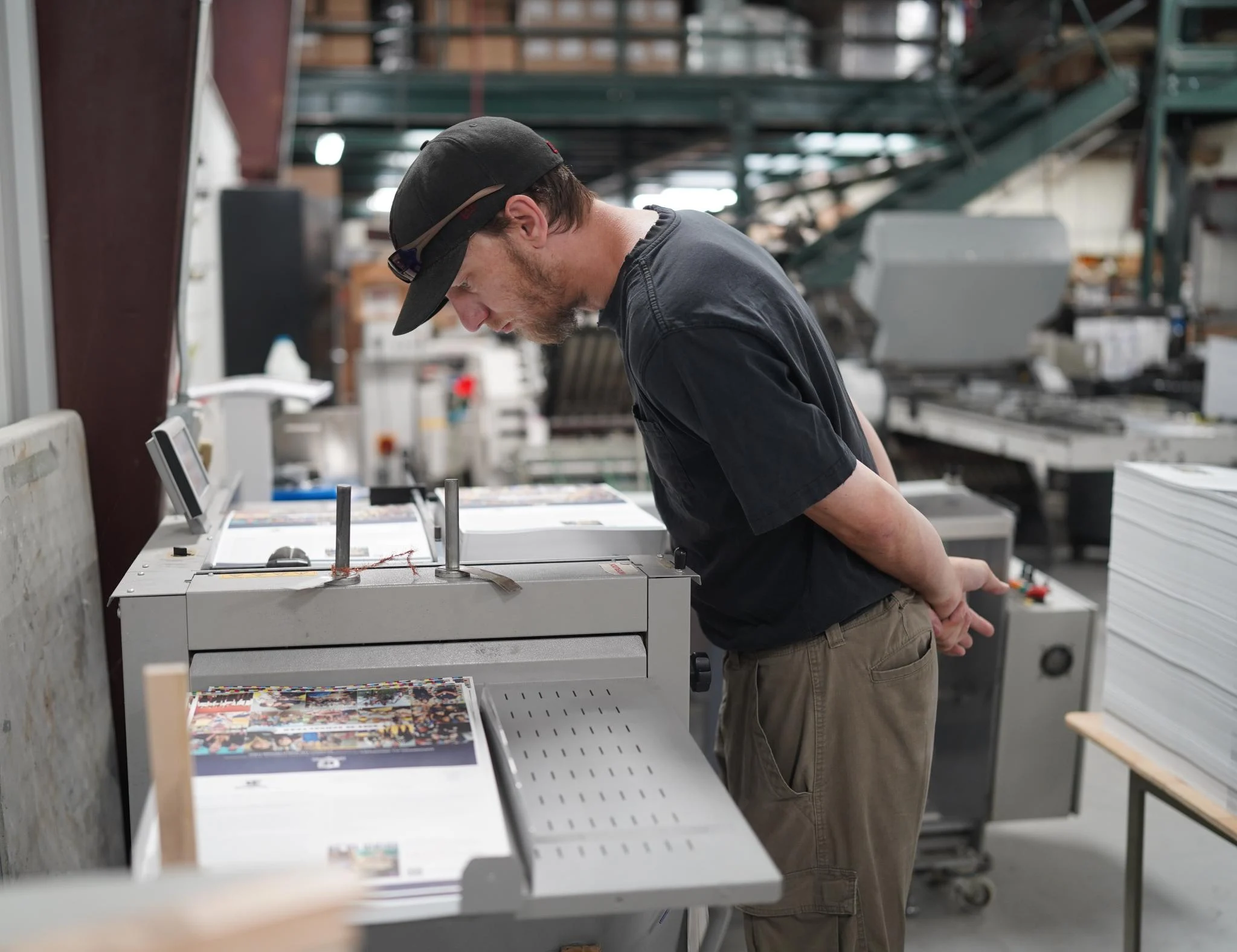
Publishers serving specialized industries face a familiar question: What role should print play when readers have more ways than ever to get information?
Email newsletters, websites, social media and other digital channels make it possible to distribute content quickly and keep readers connected between issues. But for a trade publication, delivering information is only part of the job. Publishers also need to create an experience that feels relevant, useful and worth their audience’s time. That’s where print can continue to play an important role.
A printed trade publication gives publishers a distinct way to package industry-specific content, create a more intentional reading experience and stay visible beyond a single digital interaction.
Keep reading to learn how print can remain a valuable part of a trade publication’s strategy.
Print Can Reinforce Your Publication’s Identity
For a specialized publication, the product is more than a collection of individual articles. The publication itself can become a recognizable resource for the industry it serves. Print gives publishers a tangible way to express that identity.
Editorial choices, recurring departments, photography, typography, cover design and the progression of stories through an issue all contribute to an experience readers can recognize from one edition to the next.
That consistency can help publishers reinforce what their publication covers, who it serves and what readers can expect when a new issue arrives. Instead of encountering the brand only through individual links or posts, readers receive a complete editorial product that represents the publication as a whole.
But that identity does not belong to the publication alone. For many readers, a trade publication represents an industry, profession or passion that has become part of how they see themselves. Much like wearing a shirt representing a favorite sports team, keeping a specialized publication on a desk, shelf or coffee table can reflect that sense of connection and belonging. When readers identify personally with the community a publication serves, the printed issue can become something worth keeping rather than simply something to read and discard.
Print Gives Specialized Content a Defined Home
Trade publications succeed by serving a specific audience. Readers may share an industry, profession, technical specialty or set of business challenges, and they turn to industry publications for information that reflects those interests. Print gives that specialized content a defined environment.
Instead of presenting readers with individual articles surrounded by the distractions of the broader internet, a printed issue brings related stories, ideas and resources together in one cohesive package.
That context can benefit the publication as a whole. Editorial content establishes the issue’s relevance while advertising, sponsored content and other commercial messages can appear alongside topics connected to readers’ professional interests.
Print Creates a Different Reading Experience
Professionals spend much of their workday moving among inboxes, browser tabs, apps, alerts and meetings. Digital publishing can reach readers within that environment, but print gives publishers an opportunity to offer something different.
Reading a printed publication is a more deliberate activity. Readers can turn a page, pause on an article, notice photography or design and return to something later without a new email, notification or browser tab appearing on the same surface.
That doesn’t mean print automatically guarantees greater engagement. Publications still must earn readers’ attention through relevant content and strong design. But a print issue can create a distinct experience for readers, one that feels different from the steady stream of digital information they encounter throughout the day.
A Physical Publication Can Stay Visible
Digital content can be easy to move past. An email shifts down an inbox. A social post moves through a feed. An open browser tab eventually gets closed. But a printed trade publication remains in a reader’s physical environment.
An issue might stay on a desk or table, find its way into a common area or be picked up again when a reader has more time. Readers can revisit an article or pass an issue along to a colleague. For publishers, that physical presence creates opportunities for an issue to remain accessible beyond the moment it arrives.
The value does not have to come from an immediate response. Simply creating something useful enough for readers to keep within reach can strengthen the role the publication plays in their professional lives.
Print Gives Important Topics Room to Breathe
Specialized industries often involve subjects that cannot be adequately explained in a headline or social post. Technical changes, industry trends, new products, business challenges and professional insights may require context. Publishers need enough room to explain why something matters, not just announce that it happened.
Print provides an opportunity to develop those stories through longer-form writing, photography, illustrations, charts and thoughtful page design. That doesn’t mean every article needs to be long; concise content is valuable in print too. The advantage is having the flexibility to give an important subject the space it deserves when a quick digital interaction is not enough.
The result can be an issue designed for discovery as well as depth, with shorter items inviting readers in and more substantial stories encouraging them to stay.
Print and Digital Can Strengthen Each Other
Publishers do not have to choose between print and digital. The two can serve different purposes within the same publishing strategy. A print issue can provide a tangible, curated reading experience while digital channels help publishers communicate more frequently, distribute timely information and give readers convenient ways to explore additional content.
Print can also point readers toward online resources, websites and other digital experiences. Digital communications can promote upcoming issues or extend topics introduced in print.
Instead of treating the channels as competitors, publishers can consider the role each one plays in the reader relationship.
Specialized Audiences Deserve Specialized Publishing Strategies
Trade publishers have a unique advantage: They know who they are publishing for. When readers share an industry, profession or technical specialty, publishers can design content and experiences around interests that may receive little attention from broader media.
Print provides a physical home for specialized content and gives publishers room to build a unique editorial product. When paired with digital communication, it can be part of a broader strategy for keeping a professional audience informed and connected.
Make Print Part of a Stronger Publication
Creating a strong trade publication starts with understanding what your readers value and choosing the right ways to deliver it. Walsworth works with publishers to bring their magazines to life while supporting the larger role those publications play in connecting with specialized audiences. Whether print is the foundation of your publishing strategy or one part of a broader mix of channels, the goal is the same: creating a publication your audience will value and want to engage with.
Whether you’re launching a new trade publication or looking for ways to strengthen an existing one, Walsworth can help you turn your vision into a print experience built for your audience. Contact Walsworth to start a conversation about your publication and explore what’s possible with print.
* This article was developed with assistance from OpenAI’s GPT 5.5 large language AI model.