If 2025 taught print buyers anything, it’s that expectations do not slow down. Deadlines get tighter. Distribution costs stay under a microscope. Audiences demand content that feels relevant, not generic. The good news is that 2026 is shaping up to be a year where print gets even smarter, more connected and more responsive to real-world needs.
Across the industry, the conversation is shifting from “How do we keep up?” to “How do we unlock more value?” Automation is moving from isolated tools to end-to-end workflows. Faster cycles are becoming the standard, not the exception. Personalization is becoming practical at scale, especially for magazines, books and catalogs. And at Walsworth, we’re genuinely excited because these trends align with what our customers want most: dependable quality, less friction and more ways to connect with readers and buyers.
Trend 1: Automation becomes the foundation for modern print
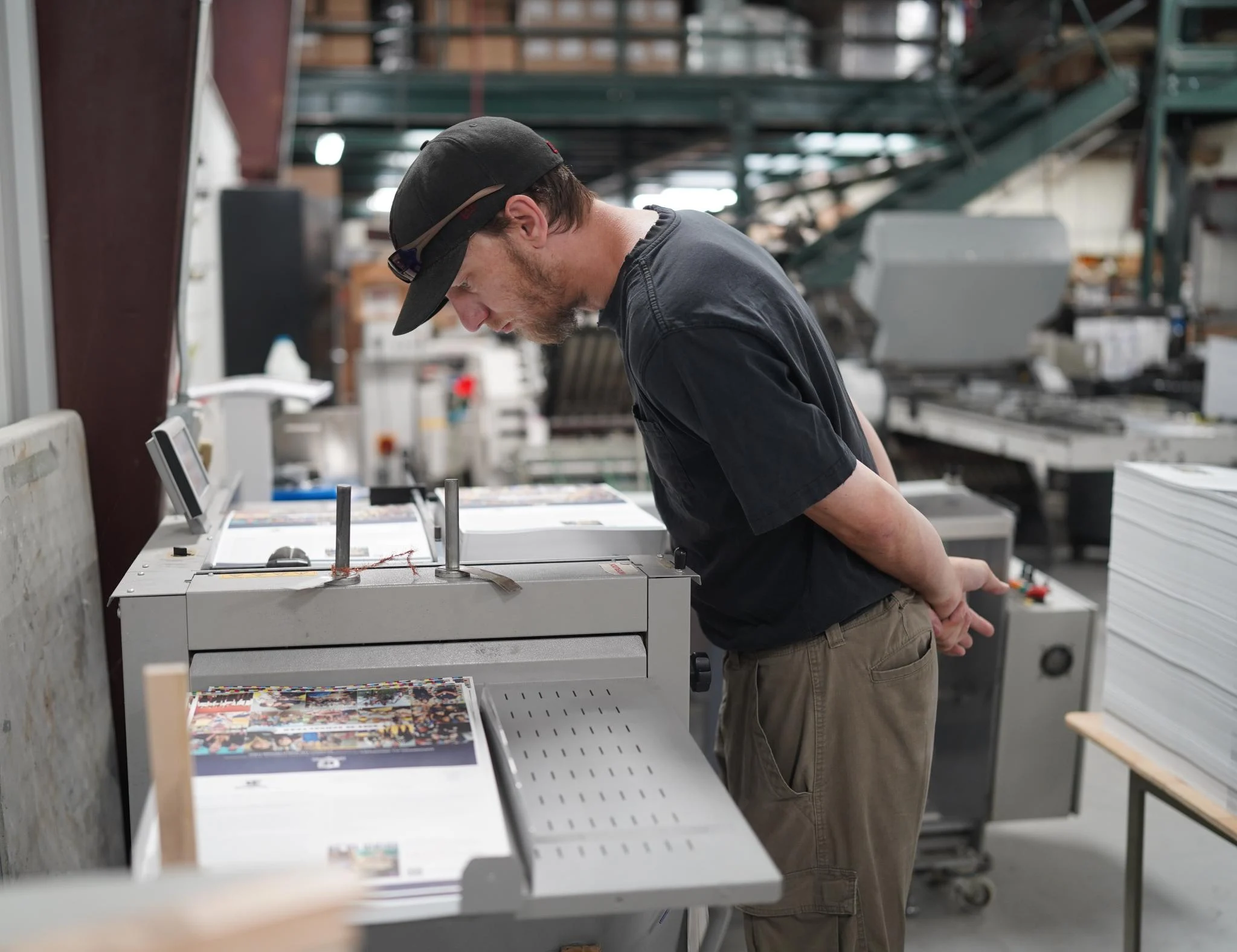
In 2026, automation will be less about replacing tasks and more about connecting the entire production experience, from order intake to finishing to delivery. Industry watchers are calling out a clear shift: automation, AI and production inkjet are no longer future initiatives. They are becoming core profit drivers, with printers who adopt them reporting meaningful gains in throughput, waste reduction and utilization.
What does that look like in real life?
- Smarter job onboarding: Cleaner handoffs, fewer manual steps and fewer opportunities for version errors
- Automated pre-press and file handling: Faster proof cycles, more consistency and fewer last-minute surprises
- More connected production data: Better scheduling decisions and tighter control of cost drivers
A big part of this shift is integration. The most competitive print operations are linking web-to-print, MIS, analytics and pre-press automation into unified ecosystems so work moves with fewer stops and starts. That matters to customers because integration tends to show up as shorter lead times, clearer communication and fewer “mystery delays.”
Walsworth has been building in this direction with print-on-demand workflows designed around speed, visibility and fewer touchpoints. In our print-on-demand process, orders can come into our system through integration with customer ordering portals or automated workflows, then move through grouping and scheduling with real-time tracking along the way.
Trend 2: Faster cycles will redefine “normal” lead times
In 2026, “fast” will not be a specialty service. It will be the baseline expectation for many segments, particularly when run lengths are smaller, versions are more frequent or distribution is complex.
Print buyers are already pushing toward models that behave more like digital manufacturing. Printing Impressions points to print-on-demand growth as a major 2026 trend, describing it as a flow of print-ready files directly into production with minimal manual manipulation, cutting out the traditional back-and-forth.
This shift is especially relevant for:
- Book publishers managing backlist, bursts of demand or “book-of-one” style workflows
- Catalog publishers balancing seasonal drops with rapid product changes
- Associations and magazine publishers needing dependable issue timing, ad placement agility and smarter distribution decisions
Faster cycles are not only about speed on press. They’re about compressing the entire timeline:
- Approvals and proofing
- Scheduling and batching
- Printing and binding
- Mailing prep and distribution handoff
Distribution is also a major part of cycle time. Walsworth is a designated U.S. Postal Service Premier Mailer and supports options like co-mail and dropshipping to help customers find efficiency in mailing cost and delivery speed. When you combine production speed with smarter mail planning, the total timeline gets a lot more flexible.
Trend 3: Personalization moves from “nice idea” to repeatable strategy
Personalization is not new. What’s changing in 2026 is how accessible it becomes.
As workflows become more automated and more integrated, personalization stops being a special, one-off project and starts becoming a repeatable option. 2026 trends point towards data-driven personalization as part of the shift from commodity printing toward value-added communication services.
In other words, print is increasingly judged not just by ink on paper, but by how well it performs as communication.
For publishers and marketers, personalization can take a few practical forms:
- Versioning by region, membership type or buyer segment
- Variable data such as names, messaging, images or unique codes
- Targeted inserts and bindery enhancements that make editions feel more curated
- Smarter response paths like QR codes or personalized URLs that connect print to digital action
This is where catalogs and magazines, in particular, can win. A catalog that highlights the most relevant product set for a customer segment can feel more like a service than a sales piece. A membership magazine that recognizes segments or interests can boost engagement and renewals. Personalization is how print can feel premium without becoming complicated.
The big point for 2026 is that personalization does not have to mean “more work for your team.” With the right data, the right workflow and the right print partner, it can be a manageable layer that adds measurable value.
The supporting shift: Sustainability becomes measurable, not just marketable
Even though automation, speed and personalization are the headline trends, sustainability will keep influencing decisions in 2026. Printing Impressions calls out sustainability as “more than a trend,” with the conversation moving toward transparency, credibility and real action.
For print buyers, that often shows up as questions like:
- Can we reduce waste without sacrificing quality?
- Can we right-size quantities and reduce inventory risk?
- Can we choose materials and processes that align with our values and our audience expectations?
At Walsworth, sustainability work includes process changes like low-emission press equipment, recyclable aluminum plates, vegetable-based inks and recycling nearly 30 million pounds of fiber-based products annually. And because faster, more automated workflows often reduce spoilage and rework, many of the “efficiency” trends support sustainability outcomes too.
How to prepare your 2026 print program
If you are planning your 2026 print schedule now, here are a few smart moves that align with where the industry is headed:
- Map your cycle time end to end. Identify where approvals, file transfers, version control or distribution planning slows you down.
- Decide where print-on-demand fits: backlist books, replenishment catalogs, special editions, test drops or personalized campaigns are great candidates.
- Start with simple personalization: version covers, add targeted inserts, regionalize content or test variable messaging in small batches before scaling.
- Bring mailing strategy into the conversation earlier so postage savings and delivery speed are designed in, not bolted on at the end.
- Ask about workflow integration: the more connected the process is, the more predictable your schedule becomes and the easier it is to scale new ideas.
2026 is the year to do more with print
Automation, faster cycles and personalization are not separate trends. In practice, they feed into each other. Automation makes speed repeatable. Speed makes personalization more realistic. Personalization makes print more valuable, which strengthens the business case for investing in smarter workflows.
That’s why we’re excited about 2026. At Walsworth, we are ready to help you take advantage of what’s next, whether you are refining a magazine production schedule, modernizing catalog workflows, expanding book fulfillment options or exploring personalization that actually feels doable. If you want to make 2026 the year your print program becomes more agile, more targeted and easier to manage, let’s talk.
This article was developed with assistance from OpenAI’s GPT 5.2 Pro Deep Research large language AI model.